Interactive animal sounds and stories for toddlers and preschoolers
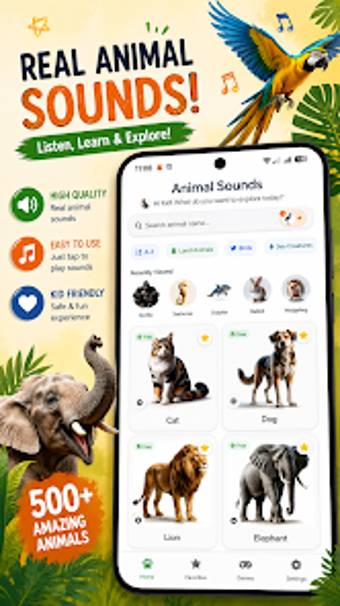
Littleroars, from KRAZY, is an Android educational app that introduces young children to the animal kingdom through sounds and storytelling. It pairs realistic vocalizations with narrated interactive stories, memory games, and short quizzes to develop listening and early reading skills while teaching species facts. Highlights include authentic audio recordings, habitat and diet notes, mini-games, and a favorites list for quick access. Designed for toddlers, preschoolers, and caregivers, the app supports early curiosity and foundational auditory and vocabulary development.
What is the app used for?
The app functions as an audio-led animal exploration tool that connects sound recognition to factual learning. It presents many species through realistic animal sounds and short narratives, so young learners encounter calls and supporting information together. That combination positions the app as an introduction to animal identification and basic natural-history facts, suitable for short guided sessions focused on listening and species recognition.
How does the app teach listening and vocabulary?
The pedagogical design mixes listen-and-respond activities with story context and recall tasks. Learning activities include:
- authentic audio playback to train auditory discrimination,
- narrated stories that place animals in simple scenes,
- mini-games that test recognition and memory.
Is the app suitable for toddlers and preschool classrooms?
The interface is built for very young users, with a colorful, simple presentation that supports toddlers and preschoolers and their caregivers. The app explicitly targets parents and educators, making it appropriate for one-on-one or small-group use where an adult guides interactions. The safe, interactive environment reduces complexity for children while letting adults shape session length and focus.
Does it provide progress tracking or content customization for teachers?
Assessment is limited to in-app quizzes and challenges, which offer momentary checks of recognition and recall but do not produce exportable reports or teacher dashboards. Customization options are modest: a Favorites list lets users save animals for repeated exposure, yet the app does not advertise content authoring or import tools. For classroom use, educators should plan complementary assessment methods to document learning over time.
Best for guided early learning; not a substitute for classroom assessment
The app is a practical option for caregivers and early educators who want an engaging, sound-focused introduction to wildlife and basic listening practice; it lacks classroom-grade reporting, so teachers should not rely on it for formal assessment. For better retention, use short daily sessions and pair the app with picture books or outdoor observation to turn audio encounters into observable vocabulary gains.